Skin gets dry in winter because cold air holds less moisture, leading to a drop in both outdoor and indoor humidity. This dry air rapidly draws moisture out of your skin, while indoor heaters and hot showers strip away the natural lipids that protect your skin.
The main culprits causing winter dryness:
Low Humidity: As the temperature drops, the amount of water vapor in the air decreases. This causes moisture to evaporate quickly from your skin in process called trans-epidermal water loss.
Indoor Heating: Space heaters and fireplaces create a desert-like environment indoors. This further drops humidity, dehydrating your skin while you are inside.
Compromised Skin Barrier: The cold outdoors and hot indoor environments reduce the natural fats (ceramides) and oils in your skin. When this barrier is damaged, water escapes much easier, leaving your skin feeling tight, flaky and itchy.
Hot Showers and hot baths: Taking long, steamy baths or showers feels great in the cold, but the hot water strips your skin of its natural protective oils, making you even more prone to dryness.
How to combat it:
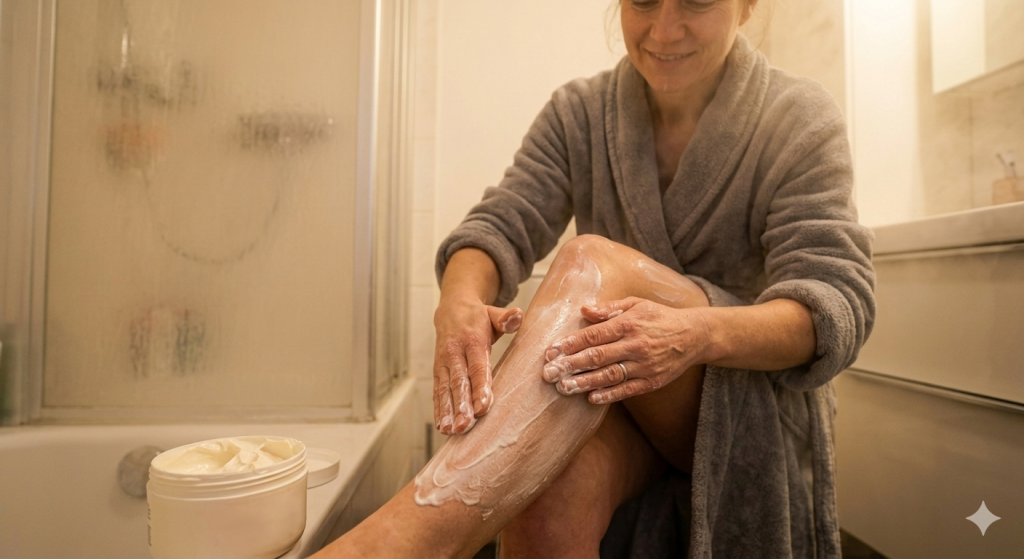
Moisturise immediately: Apply a thick, ceramide-rich cream or an ointment within 3 minutes of bathing to trap water in your skin.
Lower the water temperature: Swap scalding hot showers for lukewarm or warm ones to preserve your skin’s natural moisture.
Add moisture to the air: Use a humidifier in your home (especially in your bedroom) to combat the drying effects of heaters.
Commercial detergent bars significantly contribute to dry winter skin.
Commercial detergent bars aggressively strip away the skin’s natural lipid barrier.
While traditional handmade soaps contain natural fats and moisture-retaining glycerin, mass-produced commercial bars are often synthetic chemical detergents (known as syndet bars or “toilet soaps”.
Why Commercial Soaps Dry Your Skin.
Alkaline pH: Healthy skin has a slightly acidic pH of around 5.5. Many mass-market soap bars are highly alkaline, with a pH between 9 and 10. This drastic mismatch disrupts your skin’s protective acid mantle.
Stripped Glycerin: Glycerin is a natural humectant that draws moisture into the skin. Commercial manufacturers frequently strip glycerin out of their bars to sell it separately for higher-profit lotions, leaving behind a harsh, drying cleanser.
Harsh Surfactants: These bars rely heavily on synthetic surfactants like Sodium Lauryl Sulfate (SLS). SLS is highly efficient at breaking down grease and creating a heavy lather, but it forces your skin proteins to denature and degrades the outer skin layer.
Cumulative Barrier Damage: In the winter, the skin barrier is already weak from low humidity and heating. Washing with a detergent bar emulsifies and washes away the remaining protective lipids. This triggers a rapid acceleration of trans-epidermal water loss, causing that signature tight, squeaky clean, itchy feeling.
Alternative.
To protect your skin barrier, you do not have to abandon soap completely.
Use for a “Superfatted” Bar of soap: Our traditional cold-process soaps are formulated with extra plant-based oils, leaving at least 5% of the oils un-saponified. They leave a nourishing film on the skin rather than stripping it away.
Avoid Synthetic Fragrances: Added perfumes and dyes further aggravate raw, cracked winter skin. Our range of cold-process soaps are formulated with zero dyes, fragrances, and perfumes. We only use ingredients directly from nature.
Leave a Reply